
100% RTP original casino games: What they really mean
Crypto casinos now compete on something that sounds almost too good to be true – original games with 100% RTP.
On paper, that means zero house edge and no operator profit.
I’ve spent enough time to know that no business gives away money for free. So why do platforms like Gamdom and Duel offer original games with no mathematical advantage?
And more importantly, what’s the catch? Let me break it down.
🔑 Key Takeaways
- 100% RTP is a theoretical average calculated over millions of rounds – it does not guarantee you will break even in any single session.
- Variance still plays a major role. Players can and do lose, even at 100% RTP.
- Most 100% RTP offers are capped or time-limited. Gamdom and Duel, for example, cap it at $50K in cumulative bets before the RTP drops to 99%.
- Operators use 100% RTP as a player acquisition tool – it’s a calculated marketing decision, not charity.
Best reviewed 100% RTP originals
|
Game
|
Return to Player (RTP) indicates a game’s expected long-term payout.
Learn more
RTP
|
Max multi
|
Min bet
|
Max win
|
This metric is rated on our 1-5 provably fair scale, where 5 indicates the highest level of fairness.
Explore the scale
Fair. score
|
Preview
|
|
|
|---|---|---|---|---|---|---|---|---|
 Mines
Gamdom Originals
Mines
Gamdom Originals
|
99 RTP 99% | 1000 Max multiplier 1,000x | 0.01 Min bet $0.01 | 1000000 Max win $1,000,000 |
4
Fairness score
|
SEE MORE PLAY NOW | ||
 Crash
Gamdom Originals
Crash
Gamdom Originals
|
99 RTP 99% | 1000000 Max multiplier 1,000,000x | 0.01 Min bet $0.01 | 100000 Max win $100,000 |
4
Fairness score
|
SEE MORE PLAY NOW | ||
 Plinko
Gamdom Originals
Plinko
Gamdom Originals
|
99 RTP 99% | 1000 Max multiplier 1,000x | 0.1 Min bet $0.1 | 100000 Max win $100,000 |
4
Fairness score
|
SEE MORE PLAY NOW |
Top 100% RTP casino genres
Most 100% RTP titles fall under the “originals” category – games built in-house by crypto casinos rather than licensed from third-party providers.
Here are the most common genres ones you will find:
- Dice – A simple over/under prediction game. You set a target number and bet on whether the roll lands above or below it.
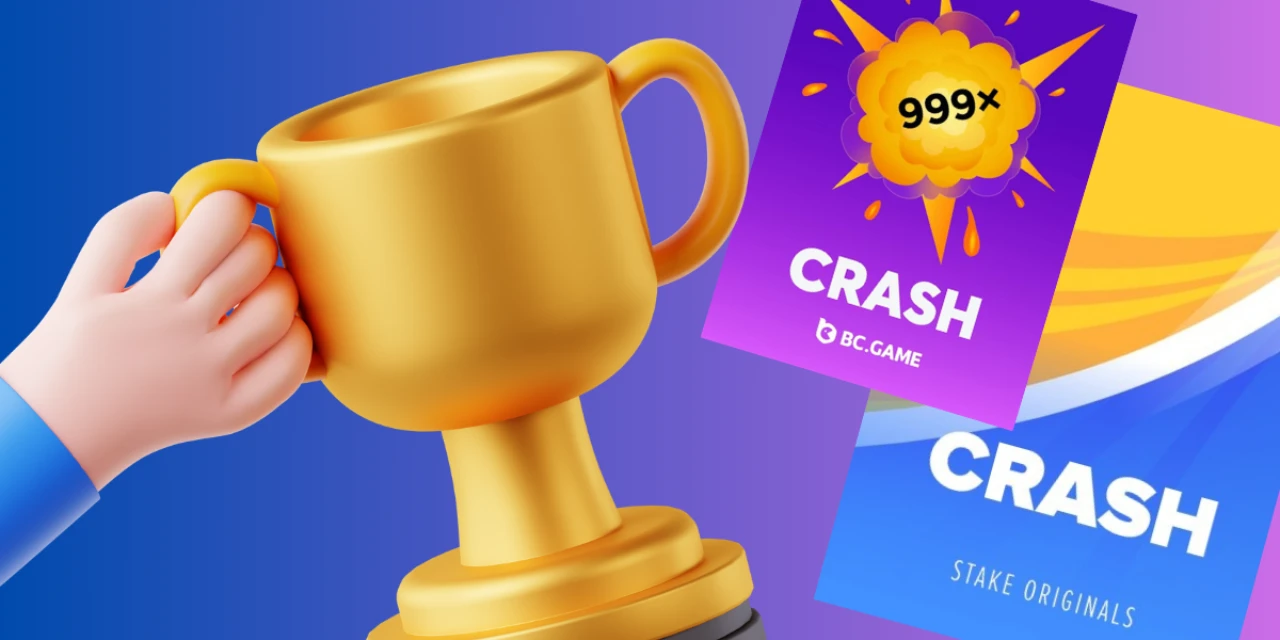
- Crash – A multiplier climbs from 1x upward, and you cash out before it crashes. The tension is real, and the game moves fast.
- Plinko – A ball drops through a pegged board and lands in a multiplier slot at the bottom. Low risk, medium risk, or high risk – your choice.
- Limbo – You pick a target multiplier, and the game generates a random result. If the result meets or beats your target, you win. Simple, fast, and brutal when it misses.
- Mines – A grid of tiles hides gems and mines. Every safe tile you reveal increases your multiplier, but hit a mine and you lose your bet. Pure risk-reward decision-making.
- Keno – Pick numbers on a grid, then see how many match the random draw. The more matches, the higher your payout.
- Wheel – A segmented wheel spins and lands on a multiplier. Low-risk segments appear more often, and high-risk ones pay big but hit rarely.
What does 100% RTP mean?
RTP stands for Return to Player.
A 100% RTP means that, over an extremely large number of rounds – think millions – the game will theoretically return every dollar bet back to players as a collective pool.
No profit for the house.
I want to stress “theoretically” here. RTP is a statistical model, not a promise.
If you sit down and play 50 rounds of Crash at 100% RTP, your personal result will almost certainly differ from 100%. You might finish up 40%.
You might finish down 60%. The number only converges toward 100% across a massive sample size that no individual player will ever reach in a single session.
Think of it like a coin flip. The expected outcome over infinite flips is 50/50.
But flip it 20 times, and you might get 14 heads and 6 tails. Short-term results deviate from long-term expectations – and that’s exactly what happens at 100% RTP.
Why 100% RTP doesn’t mean you always win?
Variance is the reason – but can you really trust original games?
To be honest, some players can jump into 100% RTP games with the “genius” idea that they can’t lose. Well, assumptions can go wrong.
Variance measures how far individual results swing from the expected average.
A high-variance game like Crash or Limbo can produce massive wins and devastating losses in quick succession – even when the underlying RTP is 100%.
The math balances out over millions of rounds, but your bankroll exists in the short term.
Let’s say you play 200 rounds of Mines at 100% RTP. You hit a mine early in 15 of those rounds and lose your full bet each time.
You also land a few big multipliers that compensate on paper, but the emotional and financial damage of those 15 losses is real. The RTP didn’t protect you – it never does on a per-session basis.
Bet sizing matters too. A player who doubles their bet after every loss (Martingale-style) at 100% RTP can still blow through their bankroll faster than someone who flat-bets at 97% RTP.
RTP is one variable in a much larger equation.
Who invented 100% RTP games and why?
Most 100% RTP originals trace their roots back to the early crypto gambling days – platforms like Primedice, Bustabit, and SatoshiDice.
These operators needed a way to build trust with players who had no regulatory framework to rely on.
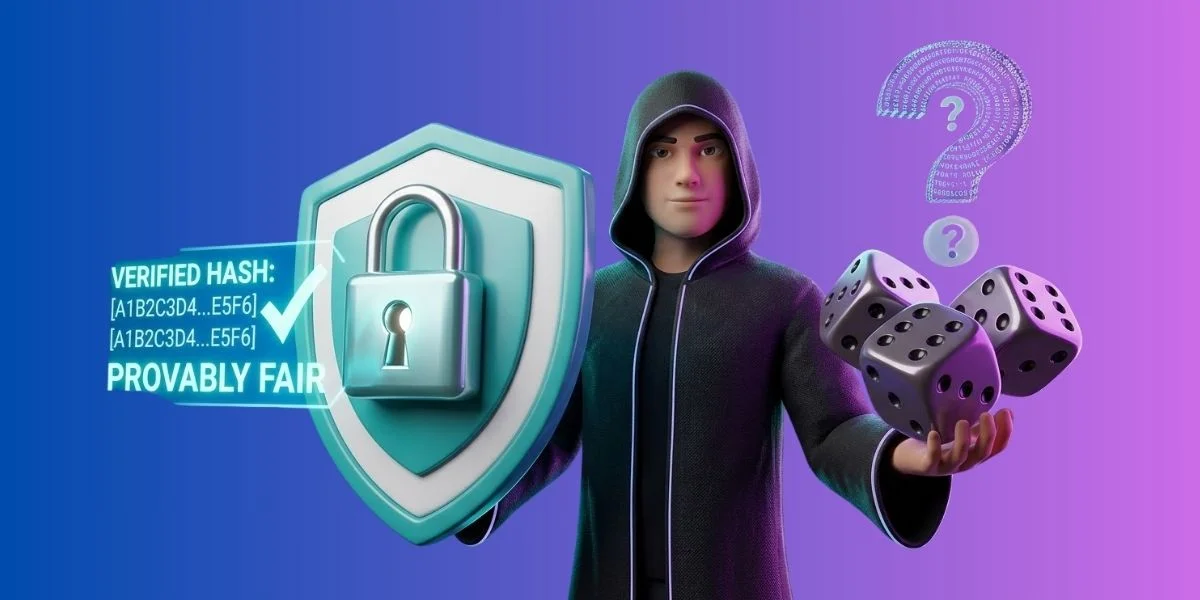
The answer was provably fair technology.
Operators publish cryptographic seeds before each round, and players can verify the outcome was not manipulated after the fact.
Provably fair games gave crypto casinos credibility when they had nothing else – no licenses, no brand recognition, no track record.
Original games fit this model perfectly.
Dice, Crash, and similar titles are simple enough for players to verify, and the RTP is set transparently in the code.
Over time, these games became a signature feature of crypto casinos – a category that separates them from traditional platforms that rely on third-party slots and table games.
Does 100% RTP remain forever?
Here’s the part most players miss: 100% RTP is rarely a permanent feature. Operators apply conditions, and those conditions matter.
Gamdom and Duel both offer 100% RTP on their original games, but they cap it at $50,000 in cumulative bets.
Once you cross that threshold, the RTP drops to 99% – which means a 1% house edge kicks in.
For casual players, that cap is generous. For high-volume grinders, it’s a limit that changes the math significantly.
Other platforms may limit 100% RTP to specific games, apply it only during promotional periods, or limit it to the base game while side bets or bonus features carry a different edge.
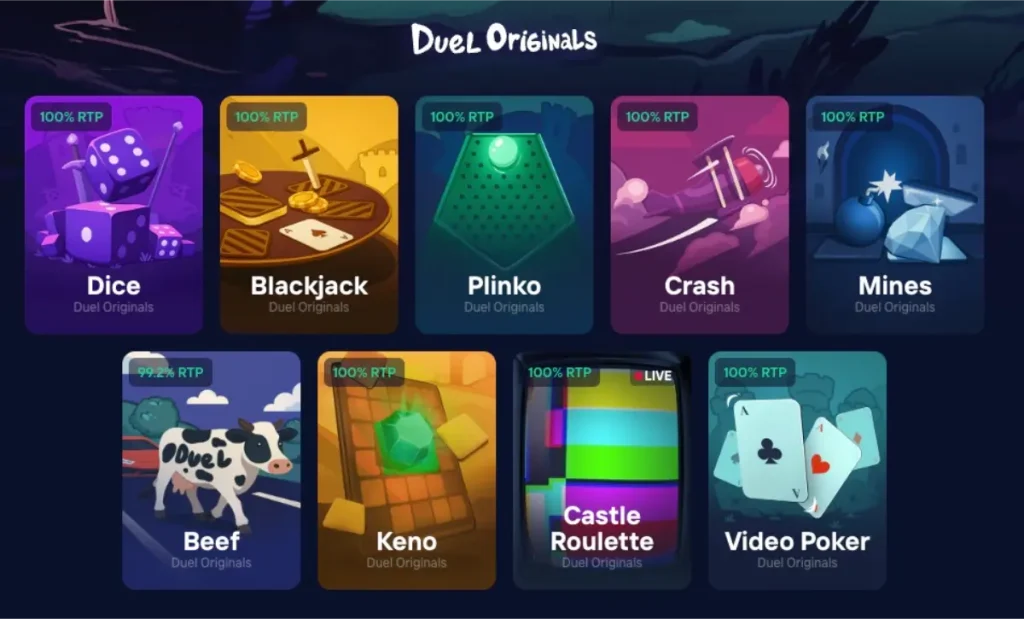
The terms and conditions page is where you find the real story, and I always recommend reading it before assuming 100% RTP applies across the board.
100% RTP Is a marketing tool
Let’s be direct, no casino offers 100% RTP out of generosity. It’s a customer acquisition strategy, and a smart one.
A new player signs up because 100% RTP sounds like a guaranteed fair deal.
That player deposits crypto, tries the original games, and maybe breaks even or wins a bit.
But then they explore the rest of the platform – slots at 96% RTP, live dealer games with a standard house edge, sports betting with built-in margins.
The 100% RTP originals are the front door.
The rest of the casino is where revenue comes from.
Variance also works in the operator’s favor. Some players win and withdraw.
Others lose and deposit more. Some chase losses with riskier bets.
The operator doesn’t need a house edge when player behavior does the heavy lifting. Tilt, overbetting, and poor bankroll management generate losses regardless of RTP.
Final words
100% RTP originals are a calculated bet by operators – and the house still wins, just not from the math.
It wins from volume, player psychology, and the rest of its game library.
Treat these games as what they are – a genuinely fair offering in terms of pure mathematics, but still a piece of a larger business model, rather than a free money machine.