
Crypto casinos simplified:
All you need to know
Simple, secure, and expertly reviewed to guarantee the best playing experience with the most popular cryptocurrencies.
Our Process Explained
Since 2018, we’ve been testing crypto casinos first-hand to provide you with the best insights. Our reviews are unbiased and based on over 5 hours of testing for each platform.
READ MORE- VPN friendly
- Soft KYC
- Low deposit
- Low wagering
- Chatroom
- Discord
-
 Bitcoin
-
 Tether
-
 USD Coin
-
 Ethereum
-
 Solana
-
 Tron
Tron
-
 Dai
Dai
-
 Binance Coin
-
 Shiba Inu
-
 Chainlink
-
 Litecoin
-
 Dogecoin
-
 BAT
BAT
-
 Cardano
-
 Polygon
-
 Ripple
-
 Cronos
-
 Dash
Dash
-
 Optimism
-
 Ethereum Classic
-
 Polkadot
-
 Stellar
-
TrueUSD
-
 Uniswap
-
 PAX Gold
-
 Zcash
Zcash
-
Bitcoin Cash
-
 Avalanche
-
 Monero
-
 SUI
SUI
-
 Bitcoin SV



























-
Sort by:
- Sort by rating
- Sort by newest
 Perks
0
Perks
0
 Accepted coins
0
Accepted coins
0
 Games
0
Games
0
| Casino | Bonus | Features | Rating | Website |
|---|---|---|---|---|

|
|
VISIT WEBSITE | ||

|
|
VISIT WEBSITE | ||

|
|
VISIT WEBSITE | ||

|
|
VISIT WEBSITE | ||

|
|
VISIT WEBSITE | ||

|
|
VISIT WEBSITE | ||

|
|
VISIT WEBSITE | ||

|
|
VISIT WEBSITE | ||

|
|
VISIT WEBSITE | ||

|
|
VISIT WEBSITE |





































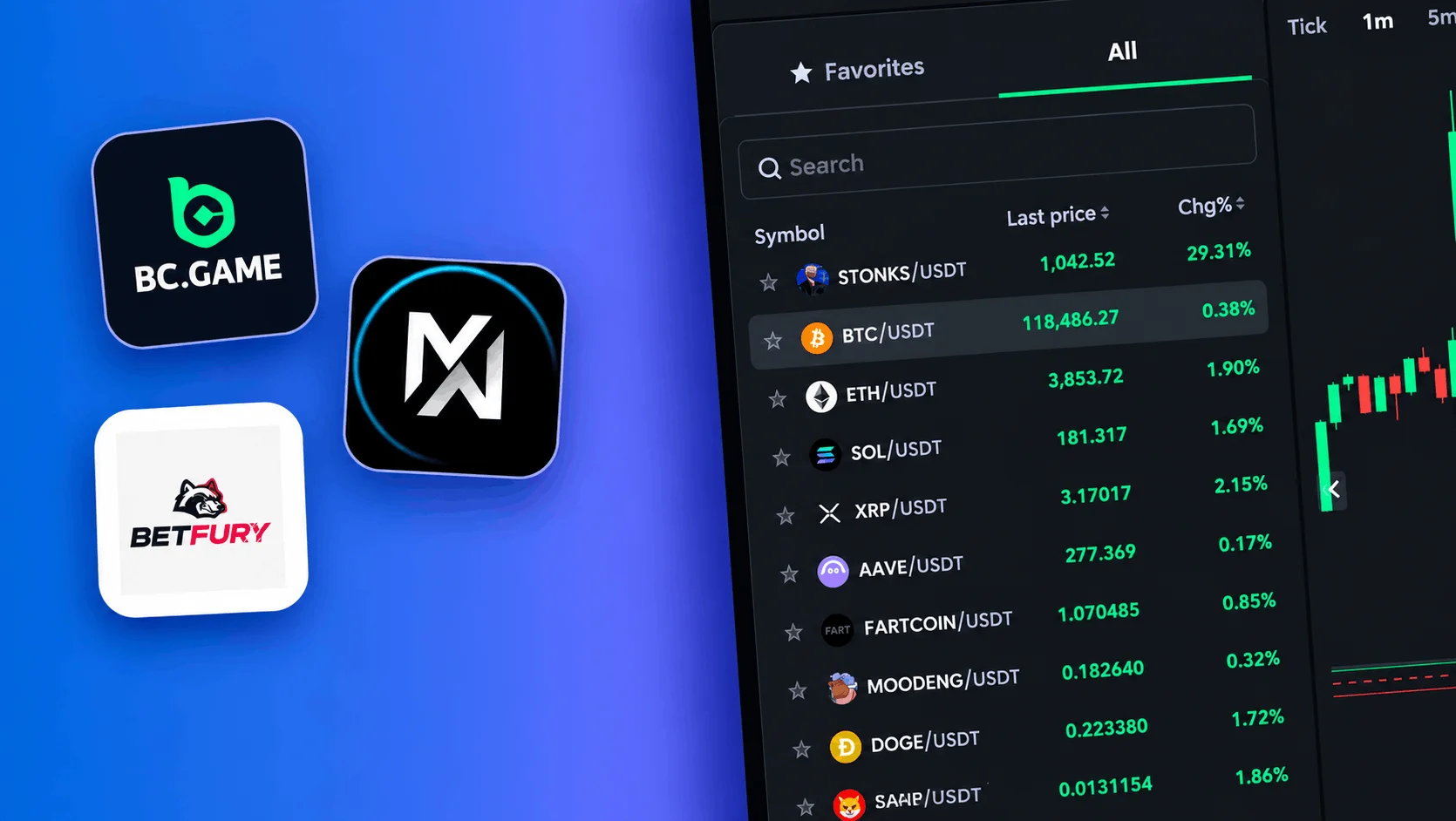
Coin dashboard

What makes or breaks a crypto casino

Reputation
The real test is how a casino behaves when things go wrong. We check player reports, payout history, dispute patterns, and how fast support actually responds. If a casino drags withdrawals or hides conditions, it doesn’t make our lists.
Read More
KYC & privacy
Crypto casinos treat verification differently. We highlight which ones run full KYC, which only ask for it on large withdrawals, and which offer privacy-first onboarding. Our reviews flag every KYC trigger so there are no surprises when you cash out.
Read More
Coin adoption & limits
Not all casinos handle crypto equally. We test deposit and withdrawal speed, network support, minimum/maximum limits, and hidden fees. Some chains are fast and cheap; others aren’t. We break down exactly how each casino performs.
Read More
Game selection
A good crypto casino isn’t just a wall of slots. We check for provably fair games, original in-house titles, and a strong mix of providers so gameplay stays varied. Platforms with quests, challenges, or leaderboards usually offer a better long-term experience, and we call that out.
Read MoreTrending casinos
Discover the game-changers. These casinos are our hot picks of the moment, and your future favorites.
Crypto gambling 101
What is a crypto casino? How does it work?
A crypto casino is an online gambling platform that accepts cryptocurrency like Bitcoin, Ethereum, or USDT. You fund your account by sending crypto to a wallet address the casino provides, play your games of choice, and withdraw back to your personal wallet when you’re done.
The games themselves (slots, table games, roulette) work just like any online casino. What changes is the payment layer. Some platforms go further and put the game logic on a blockchain, so anyone can audit outcomes independently.
Crypto casino vs. blockchain casino: what is the difference?
A crypto casino is the broadest category. It refers to any online gambling platform that accepts cryptocurrency as a payment method, whether that’s Bitcoin, Ethereum, USDT, or more niche coins like Dogecoin or Ripple. Crypto casinos may or may not use blockchain technology under the hood. Many started out as fiat-only platforms and added crypto payments later. The term emphasizes how you pay, not how the platform is built.
A blockchain casino is more specific. It uses blockchain technology for at least some core functions, whether that’s payments, provably fair game verification, or data security. That said, “blockchain casino” is actually a broader label than many people realize. Some platforms earn the name simply by integrating blockchain for transactions or fairness checks, without being fully decentralized. Others go all the way, running entirely on smart contracts with no central operator at all. Those are more accurately called dapp casinos.
What are casino dapps?
A dapp (decentralized application) casino is the fullest expression of what a blockchain casino can be. While “blockchain casino” is a broad term that can apply to any platform using blockchain for payments or fairness checks, a true dapp goes further: it uses smart contracts to handle everything end-to-end, with no central operator involved at any point.
When you play, your bets interact directly with an on-chain smart contract. Smart contracts are self-executing programs that only trigger when certain conditions are met, so there’s no operator processing your withdrawal or deciding whether to pay out. You win, you get the money. It’s that simple.
This setup comes with some real advantages. Because there’s no middleman, operational costs are lower, which often means lower house edges. Payments go wallet-to-wallet, so there are no lengthy processing times. And because the code is transparent and tamper-evident, fraud is effectively impossible on both sides. Many dapp casinos don’t even require you to create an account since you play directly from your wallet, which also means no mandatory KYC in most cases.
The trade-offs are worth knowing too. Dapp casinos typically have smaller game libraries than full-platform crypto casinos, fewer bonuses, and less customer support. They also require you to manage your own wallet (MetaMask, Phantom, etc.) rather than a custodial account, which can be a barrier if you’re new to crypto. That said, platforms like BetFury are starting to blur those lines, offering thousands of games and generous promotions while still operating as a Web3 casino.
Read MoreAre crypto casinos legal in your country?
It depends on where you are. Most crypto casinos operate under offshore licenses from Curaçao, Malta (MGA), Gibraltar, or Anjouan. You should then check if it’s legal for you to play at one of these platforms according to your jurisdiction.
Always check your local gambling laws before depositing. We flag each casino’s license status in our reviews so you can make an informed call.
Read MoreWhat is "provably fair" and how do you verify it?
Provably fair is a cryptographic method that lets you independently verify that a game outcome wasn’t manipulated. Before each round, the casino generates a server seed and you provide a client seed. These are combined using SHA-256 to produce the result. After the round, the casino reveals its original seed so you can reproduce the outcome yourself and confirm it matches.
To verify, most provably fair games have a built-in tool: click on a completed bet, open the game details, and hit verify. If there’s no built-in option, a third-party SHA-256 tool works just as well.
Because RNG certificates are often buried on provider websites and hard to interpret, we apply our proprietary Fairness Score to every game we review, a five-tier rating system designed to make fairness simple to find and trust.
How do deposits and withdrawals work?
There are a few ways to fund a crypto casino account, and the right one depends on how you prefer to manage your crypto.
The most popular method is depositing directly from a crypto wallet. It’s usually the fastest and cheapest option, with low or no fees and no third-party institutions tracking your transaction. To do it, head to the casino’s cashier, select your preferred coin, copy the deposit address provided, and send your chosen amount from your wallet. That’s really all there is to it.
If you don’t have crypto yet, some casinos let you buy it directly on-site via partners like MoonPay using a credit card, debit card, Apple Pay, or bank transfer. It’s convenient, but expect fees of around 3.5–4.5% for card purchases, plus an exchange rate markup. Some platforms, like BC.Game, also offer integrations like Cwallet for zero-fee, instant deposits with no blockchain wait times.
Regardless of which method you use, always double-check the network before confirming. USDT on ERC-20, TRC-20, and Solana are different networks and are not interchangeable. Sending funds on the wrong network typically means they’re permanently lost. When in doubt, send a small test amount first.
Withdrawals work in reverse: request a payout to your wallet address from the casino’s cashier. Timing depends on blockchain confirmations, network traffic, and any KYC checks the casino runs. If a withdrawal is taking longer than expected, the first step is to contact the casino’s live chat support.
Read MoreWhat is a blockchain confirmation and how many do you need to deposit?
When you send crypto to a casino, the transaction doesn’t land instantly. It first gets broadcast to the network, where miners or validators pick it up and include it in a block. Each new block added after that is called a confirmation. The more confirmations a transaction has, the more certain the network is that it’s legitimate and irreversible.
Most casinos require a minimum number of confirmations before crediting your account. This varies by coin: Bitcoin typically requires three to six confirmations (which usually take more than 10 minutes), while faster networks like Solana or Tron usually only need one and credit your account within seconds. Ethereum generally sits somewhere in between.
You can check the status of your transaction at any point using a block explorer (like Etherscan for Ethereum or Blockchain.com for Bitcoin) by pasting in your transaction ID.
What fees will you pay?
There are three types of fees to know about.
Gas fees are charged by the blockchain network to process your transaction and are usually passed on to you at withdrawal. These vary by chain: Solana and Tron are nearly free, while Ethereum can spike during peak hours.
Casino handling fees are rarer but worth checking for. Cloudbet, for example, reserves the right to charge 5% on withdrawals.
Finally, account fees can apply to inactivity or failed deposits and are often buried in the T&Cs, so it’s worth a quick read before signing up.
To minimize fees, choose low-fee networks like Solana or Tron, withdraw less frequently and in larger amounts, and avoid peak hours when network congestion drives gas prices up.
What happens if you send to the wrong network?
This is one of the most common and costly mistakes in crypto. If you send USDT via TRC-20 to an ERC-20 address (or vice versa), the funds may be recoverable, but only if the casino manually retrieves them. Some do this for a fee; others won’t do it at all.
In the worst cases, the funds are permanently lost. Always verify the network in both your sending wallet and the casino’s deposit page before confirming. If you’re unsure, send a small test amount first.
Do crypto casinos require KYC?
If you’re playing at a licensed casino, expect it at some point. Most crypto casinos don’t ask upfront but will trigger a check before your first large withdrawal or if unusual activity is flagged. The process typically involves submitting a passport or ID, proof of address, and sometimes a selfie. Verification can be instant or take up to two days.
A few things to keep in mind: always be honest at sign-up, because if your details don’t match your documents later, your winnings can be forfeited. And a VPN won’t save you if your country is restricted, you’ll still fail KYC at the withdrawal stage.
If privacy is your priority, a no-KYC casino or a decentralized platform is your best bet.
Read MoreWhat triggers a KYC check at a crypto casino?
The most common triggers are requesting a withdrawal above a certain threshold (often $2,000–$10,000), accumulating lifetime deposits above a limit, flagged betting patterns, or being identified as a politically exposed person (PEP).
Casinos operating under regulated licenses are legally required to conduct these checks at defined thresholds. If you’re playing on a regulated platform, assume KYC will eventually be required if you win big, and read the terms before depositing significant amounts.
Can you play anonymously at a crypto casino?
Partial anonymity is possible. At no-KYC casinos, you typically only need an email address, or sometimes just a wallet connection, to register and play. Your on-chain transactions are pseudonymous: linked to a wallet address, not your name, but publicly visible on the blockchain.
Full anonymity is harder to achieve. If you bought crypto on a KYC’d exchange and sent it directly to a casino, that chain is traceable. The practical level of privacy you have depends on how you acquired your crypto in the first place.
Can you use a VPN at a crypto casino?
It depends on the casino. Some are explicitly VPN-friendly, others aren’t, and many simply keep their policy vague in the T&Cs. Before signing up, check the terms carefully or use our VPN-friendly filter on the homepage to find platforms that allow it.
What I’d strongly advise against is using a VPN to spoof your location and access a casino from a restricted country. It might work at first, but if the casino runs a KYC check and your documents don’t match your registered location, they’re within their full right to suspend your account and withhold your winnings. It’s one of the most common reasons players complain about casinos refusing to pay out.
If you’re using a VPN purely for privacy and security while playing from an accepted region, that’s a different story. For that use case, ProtonVPN, NordVPN, and Surfshark all perform well with crypto casinos. Just avoid free VPNs, as most leak DNS data or use shared IPs that trigger casino security systems.
Read More